Marriage Bureau New York
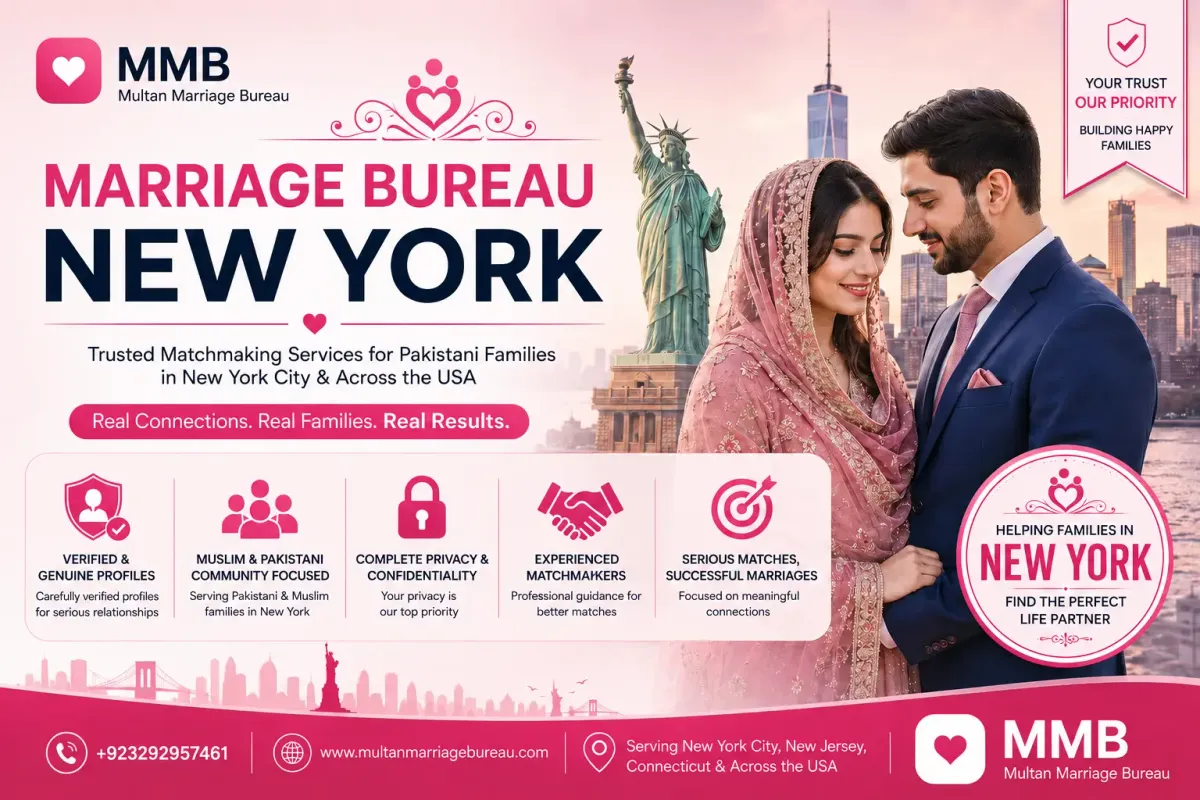
New York has one of the largest Pakistani communities in the United States, spread across Brooklyn, Queens, and the wider tri-state area, and a significant number of families there still want a spouse matched within Pakistani cultural and religious values. Searching only within the local diaspora limits the pool considerably, which is why many New York-based families register directly with a Pakistan-based bureau instead.
This guide covers how that process actually works, what the US visa route generally looks like once a match is found, and what to have ready before you start.
Why New York Families Still Register in Pakistan
- A far larger pool of matches: Pakistan's matchmaking market is simply much bigger than what's available within one city's diaspora community.
- Easier family verification: a bureau on the ground in Pakistan can check family background and reputation more thoroughly than a remote search can.
- Stronger continuity with extended family: many families specifically want a spouse who grew up within the same cultural and religious context as relatives back home.
How the Matchmaking Process Works From New York
- Register a confidential profile: completed remotely, with identity verification typically handled over video call.
- Consultation scheduled around US time zones: matchmakers coordinate calls to fit Eastern Time rather than expecting families to work around Pakistan hours.
- Shortlisting and video introductions: once mutual interest is confirmed, both sides connect directly over video before anything further is arranged.
- Family meetings: often planned around a visit to Pakistan, or extended over video if travel isn't immediately possible.
- Nikah: typically held in Pakistan, after which the couple begins the US immigration process to bring the spouse over.
US Visa Routes: K-1 vs CR-1
| Aspect | K-1 Fiancé Visa | CR-1 Spouse Visa |
|---|---|---|
| Marriage status when filing | Unmarried; couple marries within 90 days of arrival in the US | Already married, typically in Pakistan |
| Who can sponsor | Only a US citizen | US citizen or green card holder |
| In-person meeting requirement | Generally required within 2 years, with a waiver possible for strict religious/cultural reasons | Not a standalone requirement in the same way, though relationship evidence still matters |
| Where to confirm current rules | USCIS's official website, since policy has been changing recently |
Verified Matchmaking, Built Around US Time Zones
Register a confidential profile and speak with a matchmaker on a schedule that works for you in New York.
Register Your ProfileWhat to Prepare Before Registering
From the US-Based Applicant
A recent photograph, CNIC or Pakistani identity documents where applicable, education and profession details, and a clear statement of preferences, coordinated remotely, same as any registration.
Worth Discussing Early
Whether you're planning to bring the spouse to the US via K-1 or CR-1, expectations around visits before Nikah, and how the relationship's documentation will be built over time for the eventual visa application.
Frequently Asked Questions
Can New York-based Pakistani families register with a Pakistan-based marriage bureau remotely?
Yes. Registration, consultations, and initial introductions can all be handled through video calls, with identity verification also completed remotely.
Does the Nikah need to happen in Pakistan?
Not necessarily, but many families still prefer it given family ties and convenience, especially when planning a CR-1 spouse visa application afterward.
How do we decide between a K-1 and CR-1 visa?
This depends on your timeline and preferences. A K-1 allows the couple to marry after arrival in the US, while a CR-1 requires marriage first. A licensed immigration attorney can advise on which fits your specific situation.
Does a marriage bureau handle the visa paperwork?
No. A marriage bureau manages matchmaking and introductions. The visa application itself should go through a licensed immigration attorney.
Is it harder to get a K-1 visa approved for an arranged marriage?
Arranged introductions are formally accepted; what matters most to immigration officers is evidence the relationship became genuine and ongoing after the introduction, not how the couple first met.
Is family involvement still expected for New York-based clients?
Yes. Distance doesn't change the underlying process. Families stay informed and involved in decisions throughout, just coordinated across time zones.
Final Thoughts
Living in New York doesn't mean choosing between convenience and a culturally-aligned match. A bureau experienced with overseas Pakistani families can manage verification, introductions, and communication in a way that respects both your schedule in the US and your family's expectations back home.
Ready to Begin?
Register a confidential profile with Multan Marriage Bureau and start the conversation with a matchmaker who understands overseas timelines.
Visit Multan Marriage Bureau