Caste And Biradari in Pakistani Rishta
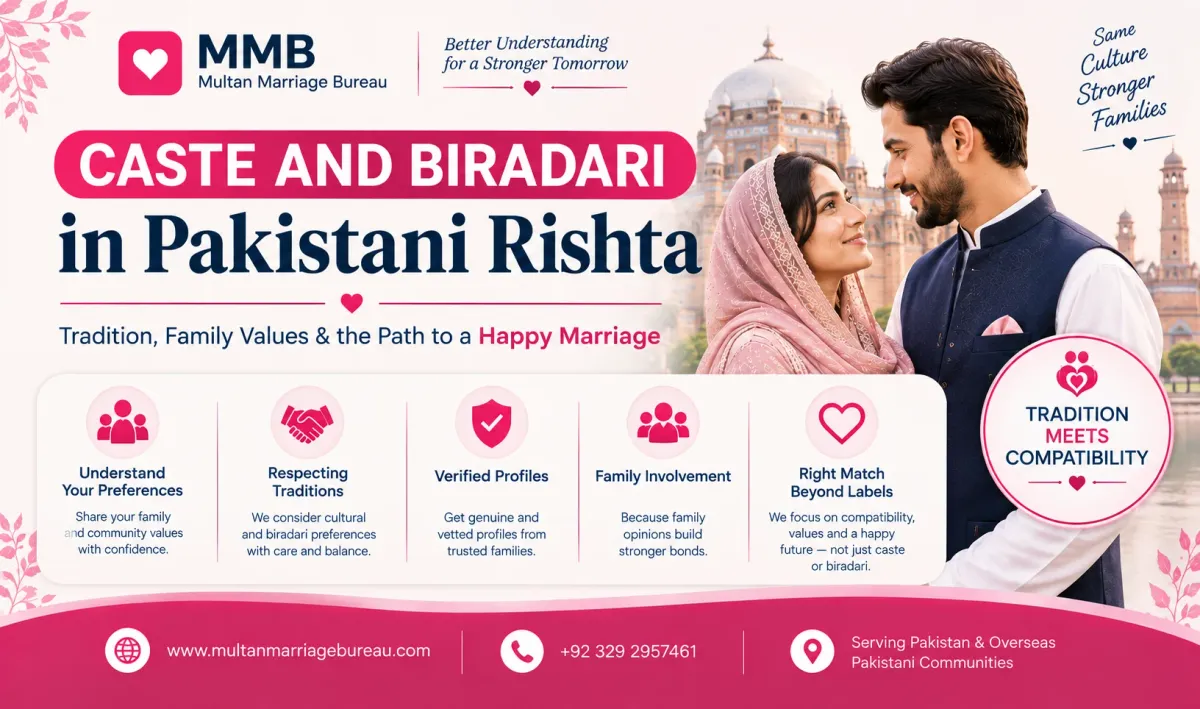
In Pakistani marriages, caste and biradari still play a real role for many families. Whether you want to marry within your biradari or are open to inter-caste, understanding how caste works in rishta — and what Islam actually says — helps you search with clarity and respect. Here's a practical guide.
Why caste matters in Pakistani rishta
For many families, biradari reflects shared culture, language, values and family networks. Communities like Rajput, Arain, Jutt, Syed, Mughal, Butt, Awan and others often prefer matches within the same background — not as judgment, but as comfort and familiarity. A good marriage bureau respects this preference and offers caste as a search filter.
What does Islam say about caste in marriage?
Islam does not recognise caste as a barrier to marriage. The Quran (Surah Al-Hujurat 49:13) teaches that people are made into nations and tribes to know one another, and that nobility is based on taqwa (piety), not lineage. So while biradari is a cultural preference many families hold, it is not a religious requirement. Both approaches — within biradari or inter-caste — are valid.
How to search for a rishta by caste
1. Choose a platform with caste filters
Use a bureau that lets you filter by biradari alongside city, sect and education. On Multan Marriage Bureau you can browse rishta by caste — for example Rajput, Arain, Jutt or Syed.
2. Balance caste with compatibility
Caste is one factor — but character, deen, education and family values matter just as much for a lasting marriage. Keep your must-haves clear, and stay open where it makes sense.
3. Verify family and background
Whatever the biradari, always verify identity, family and details independently before proceeding. A trustworthy bureau focuses on verified profiles to make this easier.
Thinking about an inter-caste rishta?
Inter-caste marriage is permitted in Islam and is becoming more common, especially among educated, urban families and overseas Pakistanis. If you're navigating one, be honest with your family early, focus on shared values, and give the family conversation time. Compatibility of character and deen is the strongest foundation.
Biradari can bring comfort and familiarity — but character, faith and compatibility build a lasting marriage.
Frequently Asked Questions
Does Islam allow inter-caste marriage?
Yes. Islam does not treat caste as a barrier to marriage — nobility is based on taqwa (piety), not lineage. Biradari preference is cultural, not a religious requirement.
How do I find a rishta within my biradari?
Use a marriage bureau with a caste filter. On Multan Marriage Bureau you can browse verified profiles by biradari — Rajput, Arain, Jutt, Syed and more — alongside city, sect and education.
Which castes can I search on Multan Marriage Bureau?
Major Pakistani biradaris including Rajput, Arain, Jutt, Syed, Awan, Gujjar, Butt, Mughal and more.
Should caste be the most important factor?
It's a personal and family choice. Many families value biradari, but character, deen, education and compatibility are equally important for a happy, lasting marriage.
Find a rishta in your biradari today
Search verified profiles by caste, city and more — with privacy and respect. Create your free profile on Multan Marriage Bureau, or browse rishta by caste and city.